

Where to find it
1
Open your chatbot
From Chatbots, click the chatbot you want to work on.
2
Open Settings
In the left sidebar, under Manage, click Settings.
3
Open Handover to a person
Scroll to the Access & management group and click Handover to a
person to expand it.
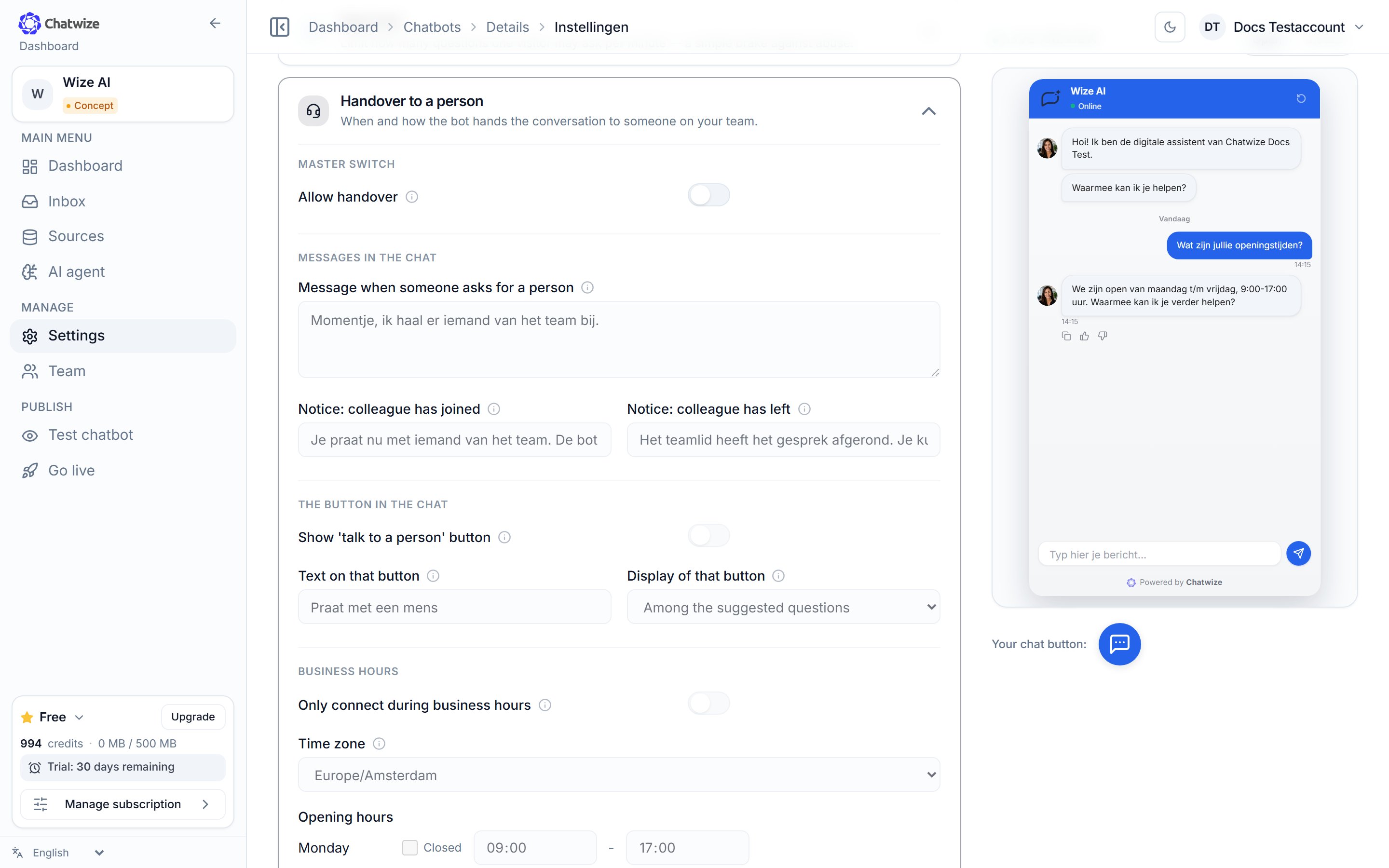
Settings → Access & management → Handover to a person.
What you set
Main switch
Main switch
Allow handover turns the whole feature on or off. With it off there is no
button, no notifications, and you cannot take over a conversation yourself
either.
Messages in the chat
Messages in the chat
What the visitor sees when they ask for a person, and the notices when a
colleague joins or leaves the conversation.
Office hours
Office hours
Optional: only hand over during office hours. You set a time zone and,
per day (Monday to Sunday), whether you are open and between which times.
Outside office hours
Outside your opening times there is no live handover; the visitor sees your offline message instead. The question is still recorded and your notifications still go out, so your team can follow up later.Taking over a conversation
1
Open the Inbox
In the left sidebar, click Inbox. Conversations where someone is waiting
are marked.
2
Take it over
Open the conversation and click Take over the conversation. At the top
you will see “Live chat active - you’re answering now”; the AI is paused
while you are handling the conversation.
3
Hand it back
Done? Click Hand back to AI and the assistant picks it up again.